
Creating to resist in the face of violence and oblivion
ByTrama on

We live in a time where we can know what is happening on the other side of the world almost the very moment it occurs. Today, images circulate rapidly, headlines multiply, and stories succeed one another without giving us time to pause. In this scenario, the question arises: how do we continue to build memory when the excess of information threatens to make ordinary what should never be so?
This was one of the central reflections of the panel Creativity and Memory in the Context of War, an encounter that took place at Centro Leñería on July 2nd, to collectively think about the role of art, culture, and creation in the face of oblivion. Rather than offering closed answers, the conversation—through the experiences of Isabel Baboun, Michel Tumani, and Francisca Donoso—opened new questions about listening, representation, and the need to create narratives capable of sustaining memory from a deeply human perspective.
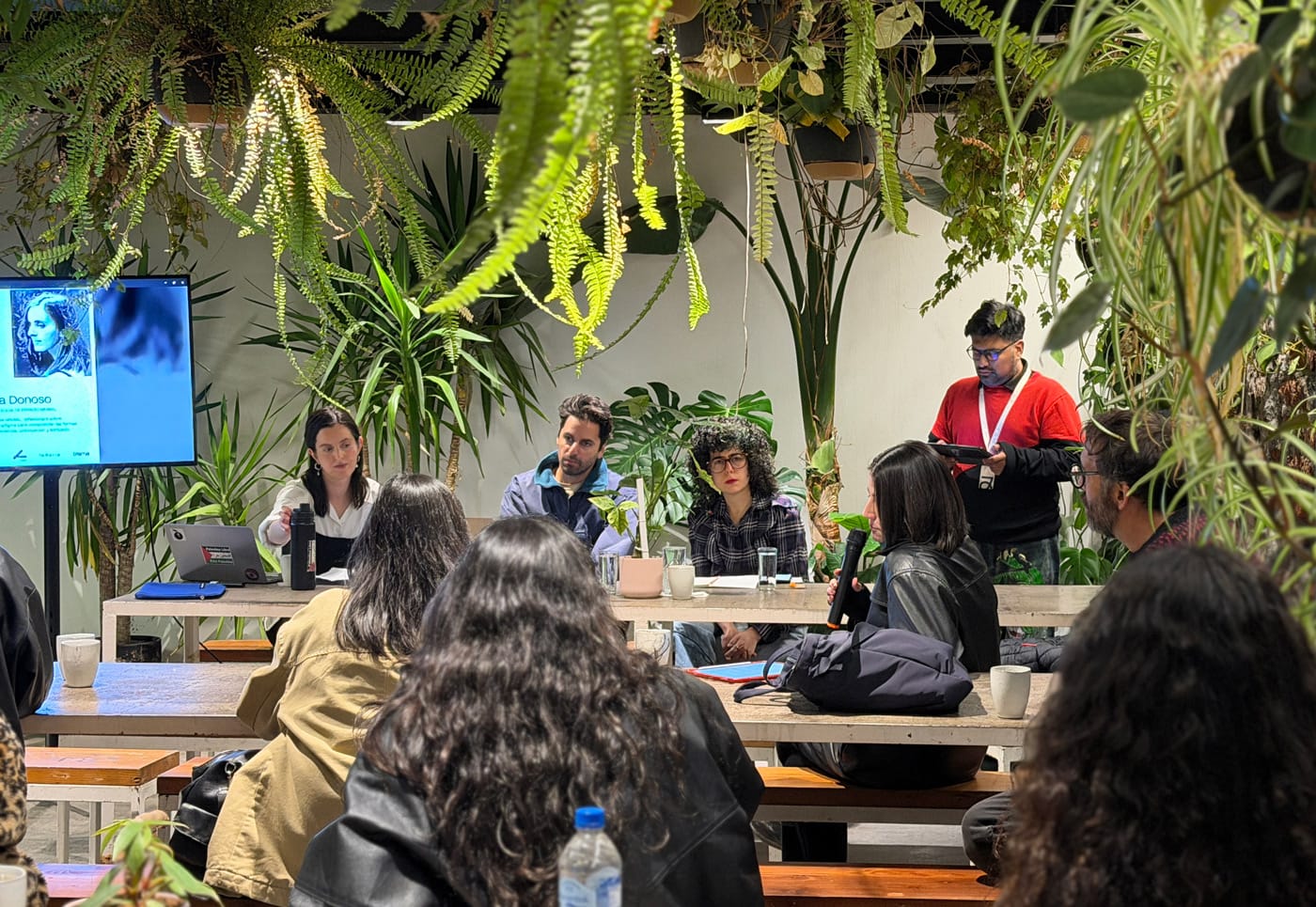
Francisca Donoso, Michel Tumani, and Isabel Baboun participating in the discussion “Creativity and Memory in the Context of War” at Centro Leñería.
Isabel Baboun, actress, writer, and author of the novel Ummi: una historia de la migración palestina—a work that reconstructs the memory of the Palestinian diaspora through a family narrative—shared some of the literary references that have addressed the subject. She also highlighted writing as a way of resisting oblivion, emphasizing the importance of listening and shared stories to build a collective memory against violence and the attempt to erase the experiences of a people and their history.
"For me, the question of the spoken life refers to listening; the spoken life is a way of resisting in the face of oblivion."
Isabel Baboun
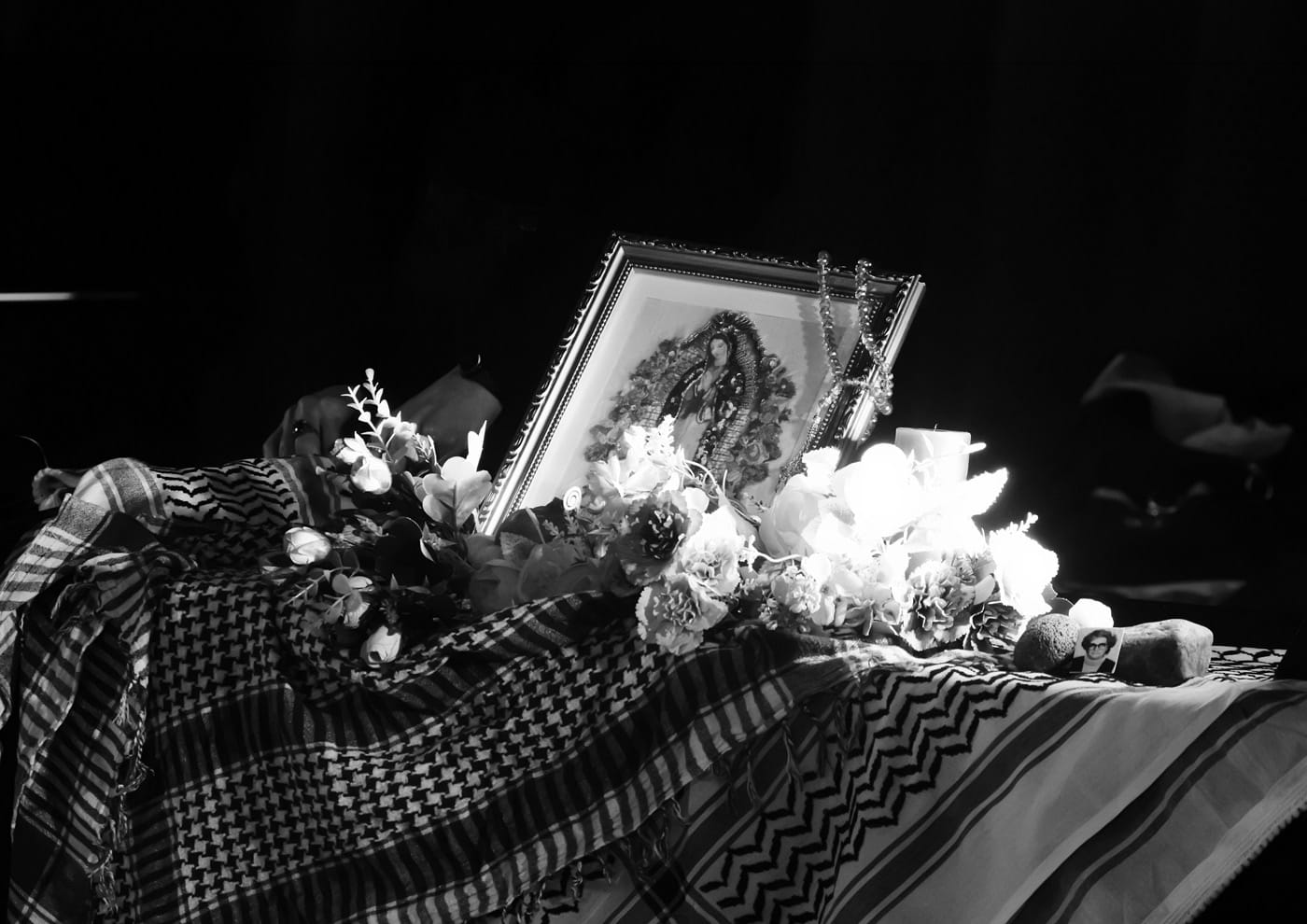
Photo of a sound performance by Isabel Baboun
Drawing from his experience as a designer and founder of The Pill Company, Michel Tumani explored how his residency in Palestine transformed his understanding of the conflict, shifting from a distant gaze to a human experience. He also shared how daily contact with communities awakened in him the need to create and find ways to convey what he lived through, reminding us that, beyond the political dimensions, there are people, stories, and bonds that need to be made visible.
"I feel that although the Palestinian cause has a political dimension, it must be seen as a humanitarian cause."
Michel Tumani

Photo by Michel Tumani, Palestine
For her part, Francisca Donoso, cultural manager and partner at Espacio MNWAL, addressed the role of contemporary art as a space capable of adding complexity to narratives and opening necessary questions in the face of current forms of violence. Based on the experience of MNWAL—a gallery driven by the Palestinian diaspora and located in the Patronato neighborhood—she revealed how cultural work can become a space for encounter, critical thinking, and community building, where emotions are also a form of knowledge.
"Art invites us to observe carefully; rather than conveying a message, it allows us to change our perception."
Francisca Donoso
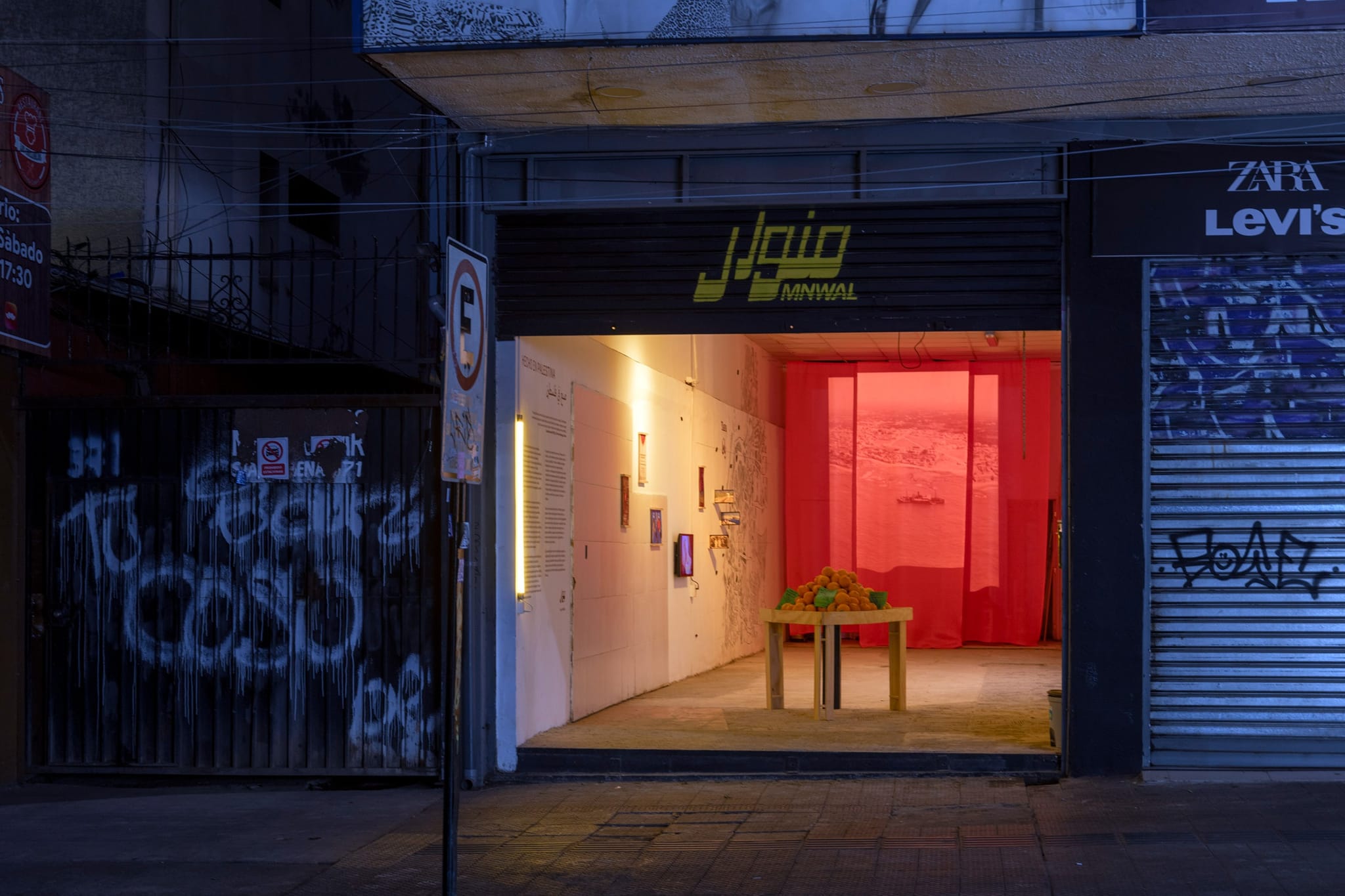
Espacio MNWAL
The panel was also an opportunity for connection among those who attended, with reflections continuing long after the dialogue on stage ended. Thanks to the collaboration of Editorial Planeta, it was possible to make copies of Ummi: una historia de la migración palestina available, allowing attendees to take home a new way to continue deepening their understanding of the stories, memories, and questions that ran through the conversation.
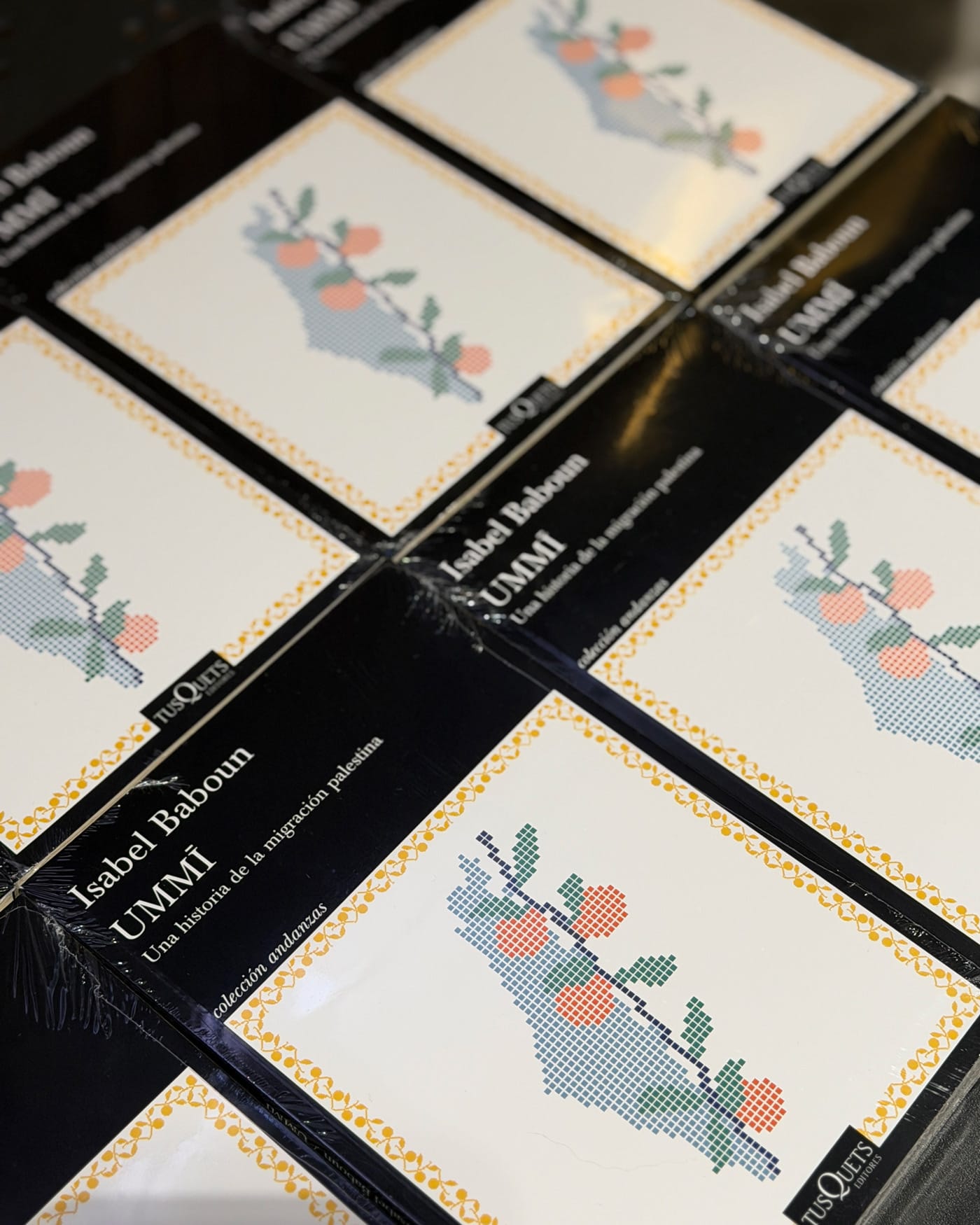
Ummi, a book by Isabel Baboun.
With this encounter, Isabel, Michel, and Francisca brought to the table questions that the cultural field often avoids: what does the image do when it ceases to move us? How is a political cause sustained without losing its human dimension? What does it mean to listen as an act of resistance against oblivion? And how can personal bonds and the creative translation of one's own sensitivity turn into action through concrete work, lived experience, and personal commitment to something larger than one's own practice?
Generating these kinds of spaces is central for Trama, stemming from the conviction that creative work does not stand apart from our human dimension, but is, rather, what makes it possible. Spaces where questions are asked honestly and connections are real are a necessity today. Neither a luxury, nor a symbolic gesture.
Thus, the series of conversations driven by Centro Leñería and Trama continues its cultural programming. During August and September, two new panels will be held, inviting us to keep meeting to think about the role of culture in the face of contemporary challenges.
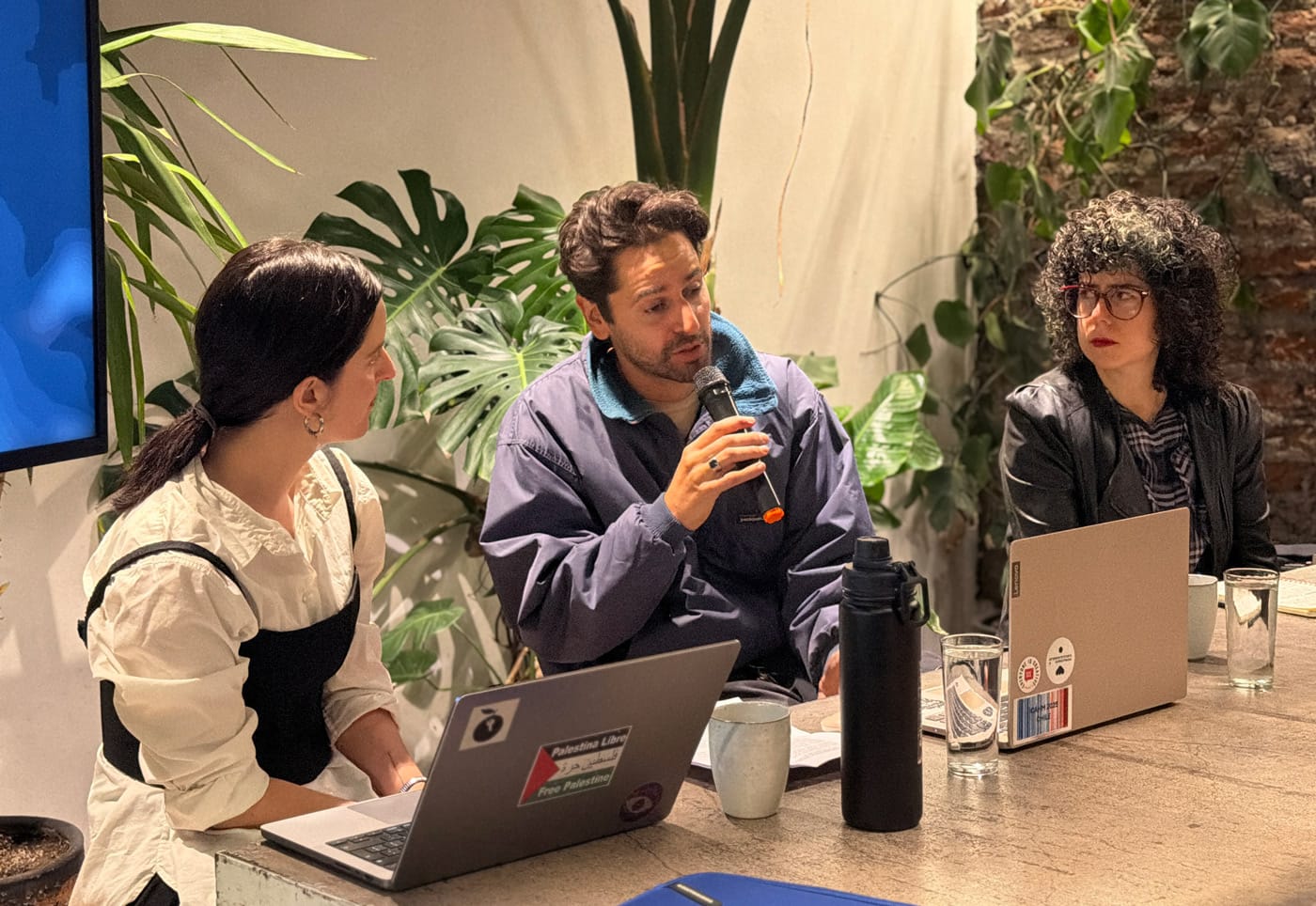
Francisca Donoso, Michel Tumani, and Isabel Baboun participating in the discussion “Creativity and Memory in the Context of War” at Centro Leñería.