
To Keep Doing
ByNatalia Stipo on
There are questions one learns to carry when working in culture; "what for?" is one of them—an old companion, almost inherent to the craft. What we didn't see coming was the speed at which it is currently growing, as if on steroids. It is no longer the question that arises after a failure; it is the one that inaugurates every project, every conversation, every new attempt to sustain something. It has become urgent in a way that no longer allows for the luxury of deferral.
And yet, we keep going. Not out of inertia or a romantic calling. But because abandoning this ground, however precarious it may be and is projected to be, would not be prudence. It would be ceding it.
What is happening today with cultural institutionality in Chile is not just a budget problem, though it obviously is that too. But it has become something closer to what Federici explains regarding the invisibilization of reproductive labor: that work which sustains everything else, which is supposed to happen on its own, which doesn't need to be named as production because it is considered natural. The kind that disappears without anyone signing its disappearance, precisely because it was never fully recognized as something that could disappear. When it is declared that the 0.6% of public spending allocated to culture is excessive, a technical calculation is not being made. Something is being said about what counts and what doesn't—about what deserves to be legible within the order of value. That, as Nelly Richard would say, is always a taking of a stance. And stances are contested, not just with data, but with the very practice of continuing to do.
But sustaining that practice today requires reviewing it from within. Because the scenario we inhabit is not solely one of scarcity, though it is that too, but of something harder to name: an erosion of the bond, a fracture advancing within and between societies, making the question of what unites us increasingly difficult to hold in public. In this context, spaces where that question can be asked with honesty are not in excess. They are lacking.
From that place, and together with Leñería, we are opening this 2026 a program of conversations that does not claim to provide answers but to explore better questions. Four encounters that stem from different urgencies but converge on a single one: what can culture do when other means have failed, or have chosen not to take charge.
The first opens the cycle with a conversation about the challenges and opportunities of copyright in artistic and creative work, alongside Wikimedia Chile and Capa3. The activity will address key tools for protecting works, understanding licenses, content circulation, and the responsible use of materials in digital environments, featuring Octavio Gana from Delight Lab and multimedia artist Mercedes Fontecilla. An instance designed for artists, cultural managers, creators, and individuals interested in strengthening their knowledge of intellectual property and free culture.
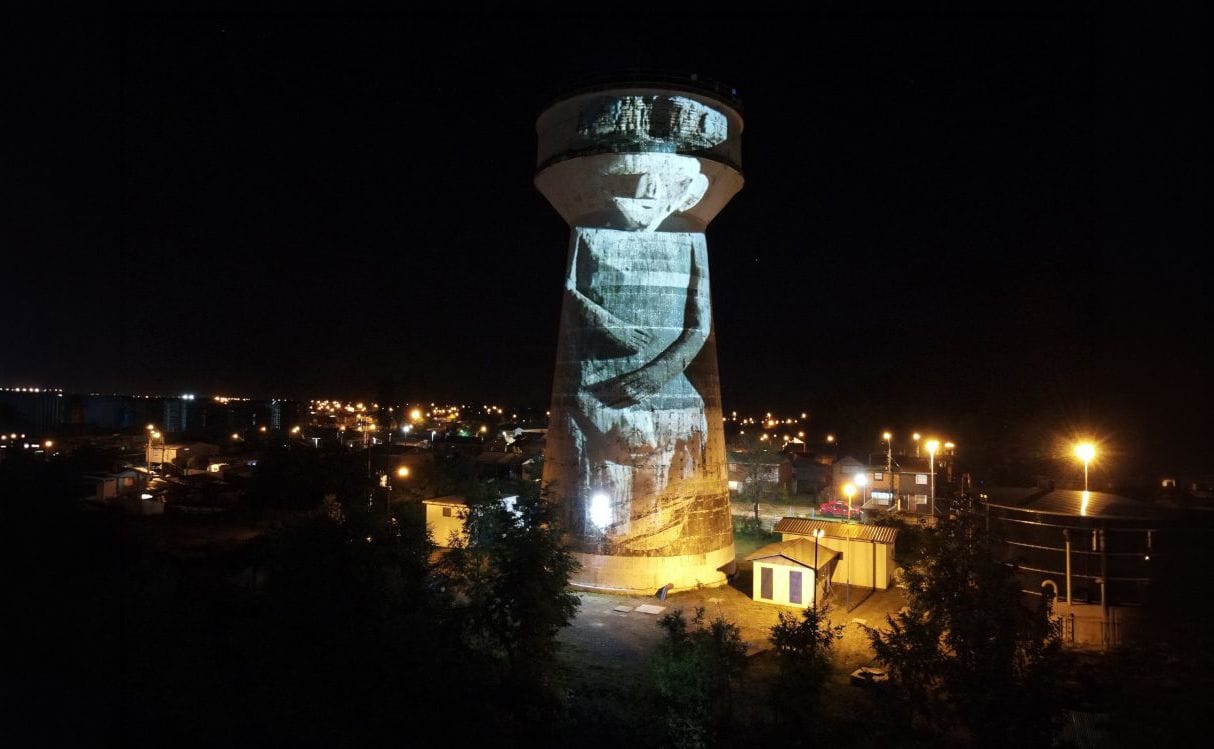
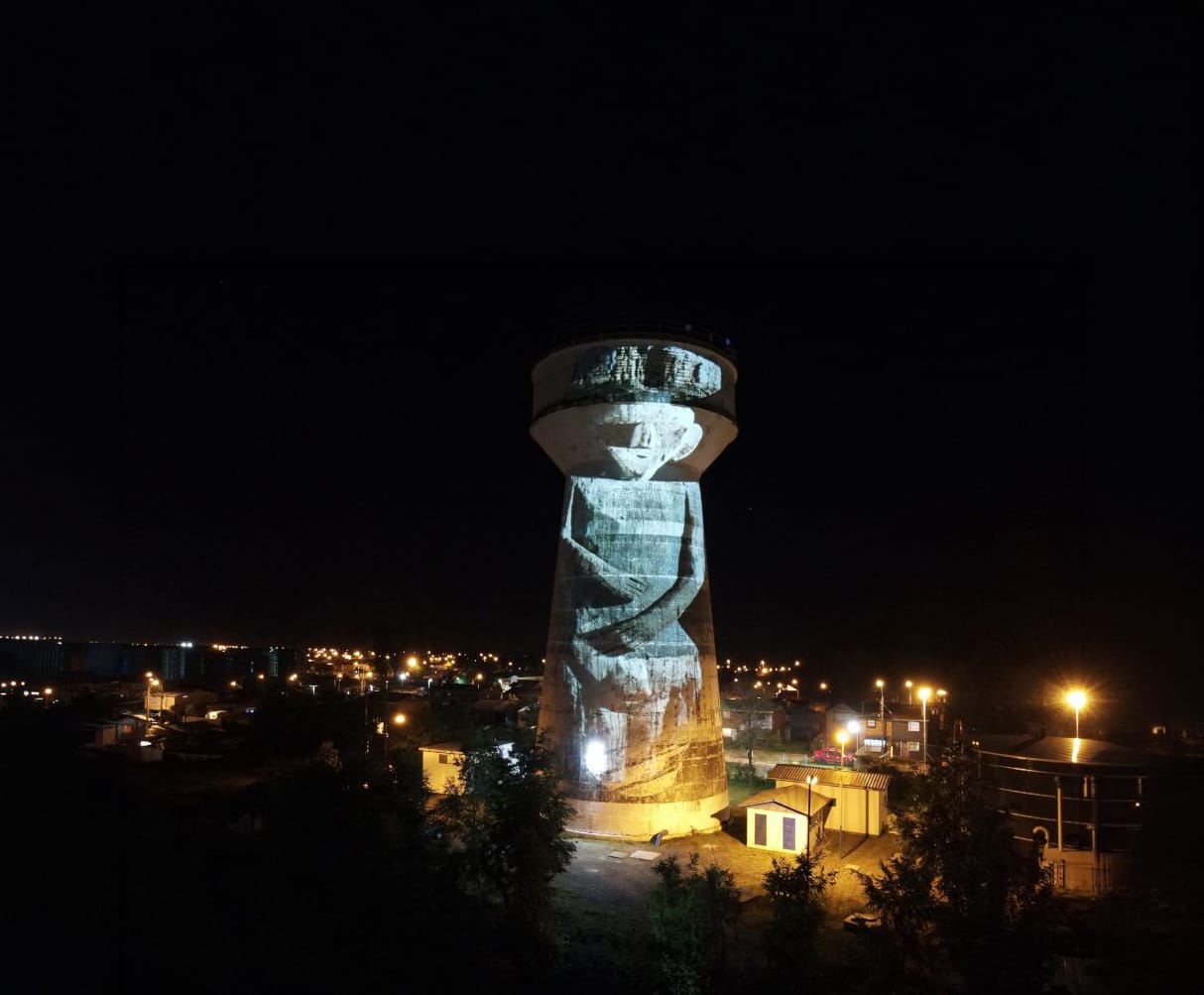
Artistic presentation by Delight Lab, guest artists at the discussion “Art, Activism, and Public Space: Challenges and Opportunities in New Technologies”
The second stops at Palestine—and what the accumulation of images has produced, or failed to produce, in our capacity to feel. For decades, what has happened there has been documented, photographed, filmed, and also widely censored. However, the accumulation of images and their "free circulation" in new media do not seem to produce what they should: understanding, compassion, action, and recognition. There is something in visual saturation that anesthetizes instead of activating, turning cruelty into an everyday landscape. The creative and cultural ecosystem has sometimes found other paths: ways of naming, representing, and transmitting that achieve what the revealed image does not always reach; moving something in the receiver, opening cracks through which empathy and humanity can enter.
This panel brings together Isabel Baboun, writer, artist, and author of the book Ummi; cultural manager and partner of the MNWAL gallery, Francisca Donoso; and Michel Tumani, graphic designer and creator of the skateboard brand Pill—three people who have worked, from their own crafts, life experiences, and human commitments, in that direction. The conversation seeks to reflect honestly on what art and culture can and cannot do when faced with what should no longer be a tolerated everyday reality: what responsibilities does this role imply? What questions does it leave open? Without claiming to be a space for mere denunciation, the instance seeks to motivate reflection on culture as a medium at the service of humanity when other means have failed so drastically and systematically.

Photograph by Michel Tumani, guest at the discussion ‘Creativity and Memory in the Context of War’.
The third examines cultural diplomacy from its most fossilized assumptions. Cultural diplomacy has historically operated as an instrument of foreign policy: a way for States to project an image, negotiate presence, and build alliances. That function has not disappeared, but the current context overflows it. At a time when the social bond is eroding within and between societies, where the capacity to recognize the other as human is contested in every public conversation, the question of what culture can do in the international space becomes more complex and more urgent.
This conversation proposes examining cultural diplomacy from its foundations: what it has been, what purpose it has served and for whom, what forms it takes when not led by the State, and how it projects itself in a scenario where building trust between communities, countries, and cultures can no longer be taken for granted. It is not enough to celebrate cultural exchange without first asking again what conditions allow that exchange to produce something real. The gathering will bring together representatives from the cultural departments of various embassies, alongside Trama, drawing from their own experience in internationalizing creativity and art—not just as a final value, but as a process of global encounter.
The fourth looks inward at the sector itself. Engaging in cultural management today means understanding that the creative ecosystem in Chile is not sustained by willpower or talent alone: it has become more urgent than ever to explore models capable of existing without necessarily depending on the circuits that have historically defined which projects deserve to exist and which do not. This conversation brings together trajectories that allow us to examine something rarely discussed with honesty: the real conditions of cultural self-determination.
Participants will include Mapa Común, creators of initiatives such as Clásica No Convencional, FOMO, and Fast—self-managed projects that have managed to thrive and sustain themselves over time; Augusta Lecaros from Galería Cripta, a space that challenges the traditional circuits of exhibition and commercialization in the art scene; Ana Carolina, founder of Feria Aparte, a traveling and recurring platform woven from grassroots efforts within the same creative circuit, transforming into a swarm of new opportunities; and Francisco Salvatierra, founding partner of Centro Leñería. What role does collaboration play when it operates as an organizational logic rather than a survival tactic? How do adaptive strategy and conviction articulate without canceling each other out? A space to open up questions from which other possible paths can be collectively envisioned.
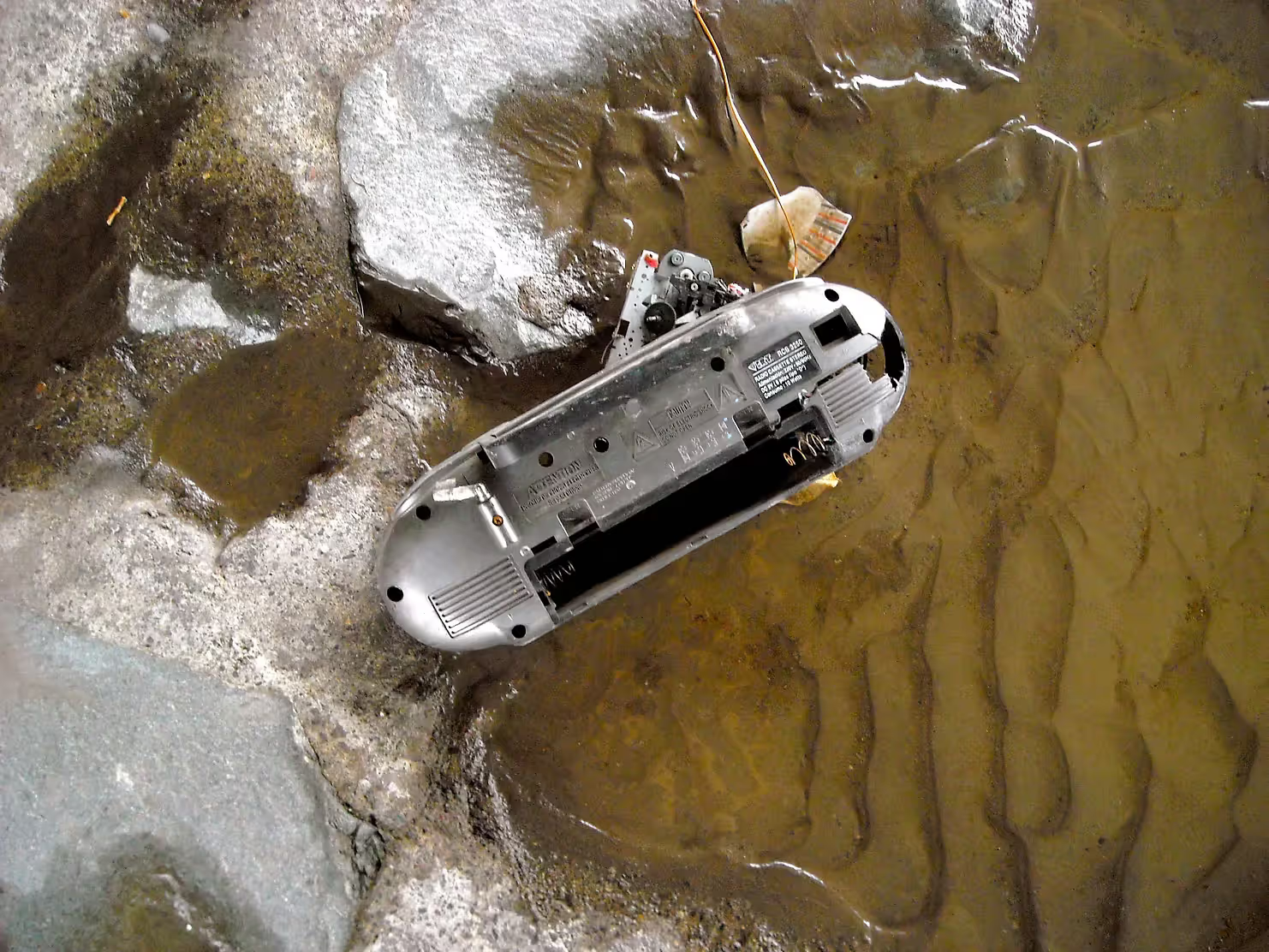
Photograph by Mercedes Fontecilla, guest artist at the discussion “Art, Activism, and Public Space: Challenges and Opportunities in New Technologies”
There are questions one learns to carry, yes. And there are moments when carrying them is no longer enough, and they must be put on the table, with others, to see what happens when they are allowed to breathe out loud.
Trama was born from the conviction that cultural management is also a form of thought. That spaces where something is questioned with honesty are not a luxury, but a necessity. That connecting people, projects, and conversations that otherwise would not meet is, in itself, a political act and an act of care. That is what we seek this year, in the face of urgency, anxiety, and sleepless nights: to continue doing, with full awareness of the conditions. Which is different from doing so in spite of them.
Register here for our upcoming panel "Cultural Diplomacy: Rethinking Encounters" on Wednesday, September 30 at 9:30 AM, featuring Cristina Di Giorgio, Director of the Italian Cultural Institute; Clarisse Gérardin, Director of the French Institute of Chile; Miguel Bravo-Ferrer Álvarez-Sala, Cultural and Scientific Counselor at the Embassy of Spain in Chile; and Javier Azócar, Director of the Organization of Ibero-American States (OEI).